
Artist
-
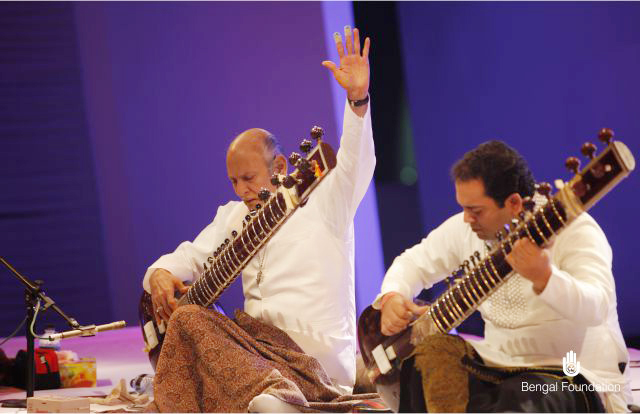
Rais Khan
From his maternal side, Rais Khan is a descendant of great sitarists of Etawah Gharana. His mother was the elder sister of Vilayat Khan. Rais Khan has been influenced by his maternal uncle's style. The sitar he plays is 'Gandhar-Pancham' Sitar - which was standardized and designed by Vilayat Khan himself. Rais Khan is the torchbearer of the Mewat or Mewati Gharana (lineage), which is connected to Indore and the "beenkar baj gayaki ang" (singing style combined with rudra vina approaches) carried out by Rais Khan's father Mohammed Khan, a rudra vina (been) player and a sitarist. Despite his extensive meend work and the gandhar pancham sitar style he uses, Rais Khan's alapi, gatkari and gamaki work is different in approach, pacing, and even technique, from the Etawah style. Amongst the Khayal and dhrupad doyens, Rais Khan's gharana is a lineage containing the masters Haddu Khan, Hassu Khan, Bande Ali Khan, Nathan Khan, Babu Khan, Wazir Khan, Waheed Khan, Murad Khan, Latif Khan, Majid Khan, Nazeer Khan, Amanat Khan and Rajab Ali Khan of Dewas, Madhya Pradesh. As Rais Khan's mother was a singer and his father was a beenkar, a unique combination of Khayal (the most popular classical vocal style), Dhrupad (the older and most orthodox classical form) and thumri (lyrical semi-classical form) - angs (approaches) developed in his playing.[6] He gave his first public concert at Sunderbai Hall in the presence of the then Governor of Bombay Sir Maharaja Singh. He is also a vocalist and is the first one to record the geet Ghungroo toot gaye for BBC London in 1978. Like Vilayat Khan, he often sings and demonstrates compositions. He has been touring extensively throughout the world. For some time, Khansaheb had stopped playing concerts of classical music. He returned in the 1980s and was invited by Ali Akbar Khan to perform in California. Rais Khan moved to Pakistan after marrying a Pakistani lady. He has four sons: Suhael Khan, Cezanne Khan, Farhan Khan and Huzoor Hasnain Khan. Farhan sometimes performs with him.
-

Raja Reddy & Radha Reddy
Raja and Radha Reddy are a dancing couple renowned as exponents of the South Indian dance form of Kuchipudi. The duo are credited for adding a new dimension to the art without compromising on its traditional virtues.
-
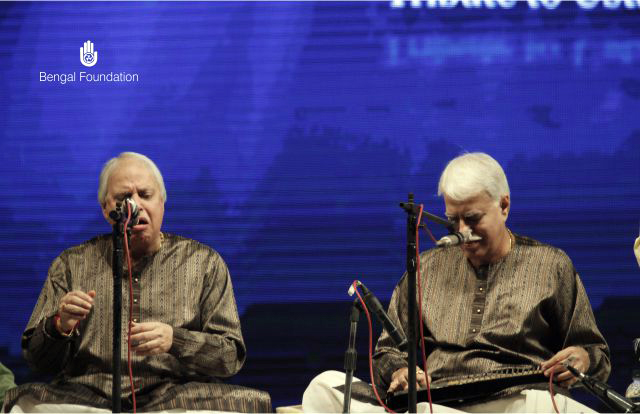
Rajan Mishra and Sajan Mishra
Rajan (born in 1951) and Sajan (born in 1956) Mishra are brothers. They were brought up in Varanasi and received their musical training from their grandfather, Bade Ram Das Ji Mishra, their father, Hanuman Prasad Mishra, and their uncle, sarangi virtuoso, Gopal Prasad Mishra. The Mishra brothers have released over 20 music albums in genres ranging from classical Khayal gayaki, to semi classical tappa and bhajans. They were awarded the Padma Bhushan in 2007, the Sangeet Natak Akademi Award, jointly in 1998 and the Gandharwa National Award for 1994-95.
-

Rajrupa Chowdhury
Rajrupa Chowdhury took up the sarod at age five and trained under Sidhhartha Roy Chowdhury for twenty years. Brought up in the legacy of Pandit Radhika Mohan Maitra of Rajshahi and Kolkata, she received top honors in Masters in Instrumental Music from the Rabindra Bharati University. She receives advanced taalim from Professor Sanjoy Bandopadhyay who continues to inspire and nurture her approach towards North Indian Classical music. Rajrupa Chowdhury has performed all around the world and has received several awards.
-

Rakesh Chaurasia
Rakesh Chaurasia is an acclaimed flautist from India. He is a student and nephew of the iconic maestro Pandit Hariprasad Chaurasia. R Chaurisia has been known to perform as a solo act, as well as with other musicians including Ustad Zakir Hussain, Bela Fleck, Edgar Meyer, and Joshua Redman, amongst others. He has extensively toured in India and abroad – some of his notable shows include WOMAD, Festival of Saint-Denis in Paris, the Leicester International Music Festival in England and – most notably – a conclusion act for a twenty-four hour live BBC Radio broadcast celebrating Queen Elizabeth’s Silver Jubilee. Chaurisia is a recipient of the Indian Music Academy Award, Dr. A P J Abdul Kalam Award, Aditya Birla Kalakiran Puraskar, Guru Shishya Award, IWAP-Pandit Jasraj Sangeet Ratna Award and Pannalal Ghosh Puraskar.
-
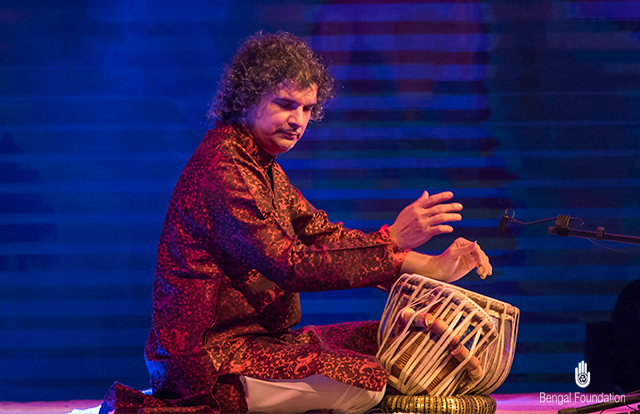
Ramdas Palsule
Ramdas Palsule is a tabla artist from India. He is a senior disciple of Pandit Suresh Talwalkar and has performed in prestigious events in India and abroad. Palsule is known to perform as a soloist, as well as an accompanying artist. His notable accompaniments include performances with Pandit Jasraj, Pandit Ram Narayan, Ustad Amjad Ali Khan, Pandit Shivkumar Sharma, Pandit Hariprasad Chaurasia, Pandit Birju Maharaj, Pandit Ulhas Kashalkar, Ustad Shahid Parvez, Ustad Sultan Khan, Pandit Vishwa Mohan Bhatt, , Dr. N Rajam, , Prabha Atre, and numerous others. Palasule is presently a Guru at the Center for Performing Arts, University of Pune.
-
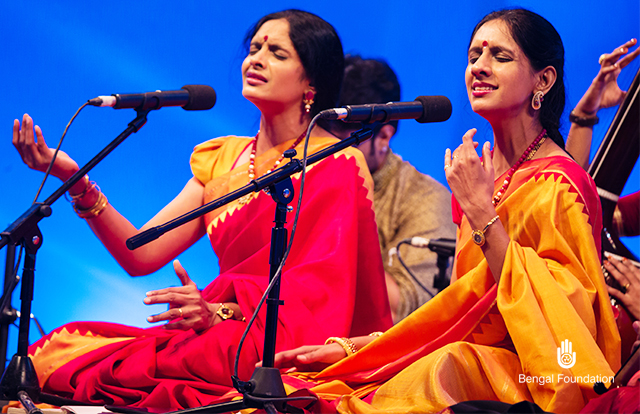
Ranjani and Gayatri
Ranjani and Gayatri Balasubramanian are world-renowned Carnatic vocalists and violinists from India. The sisters began their training at a very early age under the guidance of Prof. T S Krishnaswami at the Shanmukhananda Sangeeta Vidyalaya. They have appeared as soloists, as well as a duo, and have been known to accompany renowned artists like Dr. Balamurali Krishna and T Vishwanathan, amongst others. The sisters are a recipient of numerous awards which include the Vani Kala Sudhakara from Thyaga Brahma Gana Sabha, Lifetime Achievement award from Bharatiya Vidya Bhavan, Sangeeta Kala Siromani Award from Chennai Cultural Academy, Sanskriti Awards, Kalki Krishnamurthi Memorial Award, amongst many others.
-
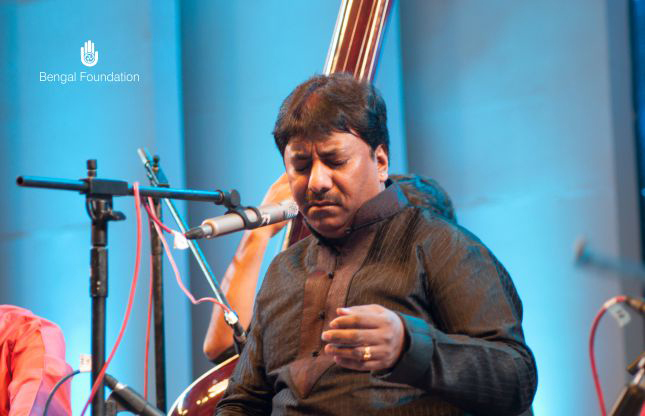
Rashid Khan
Rashid Khan is a distinguished vocalist from India. He belongs to the Rampur-Sahaswan Gharana, and is the great-grandson of Inayat Hussain Khan and the nephew of Ustad Ghulam Mustafa Khan. Khan began his training under the guidance of his uncle and later from Nissar Hussain Khan. Khan is known to include the slow elaboration in his vilambit khayals in the manner of his maternal grandfather and developed exceptional expertise in the use of sargams and sargam taankari. His vocal prowess is considered to be one best in the tradition of the Rampur Sahaswan gharana and his performances are marked by spontaneous emotional appeal. Khan was awarded with the Padma Shri, as well as the Sangeet Natak Akademi Award in 2006, Global Indian Music Awards in 2010, and the Maha Sangeet Samman 2012.